Potential routes to achieving compliance with court orders for the remediation of contaminated land
September 10, 2026
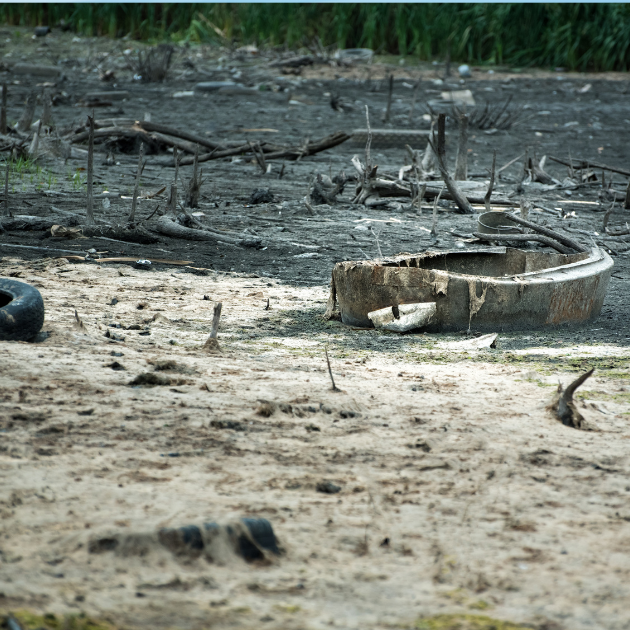
The recent article in the Observer (see link below) about the illegal waste site at Fen Lane in Lincolnshire highlights the limitations of court orders for the remediation of contaminated land, but the question arises as to whether there are other routes to achieving compliance other than by bringing contempt proceedings.
Convictions were obtained against those involved in facilitating and operating the illegal waste site, but the problem remains of how to ensure the removal of at least 10,000 tonnes of illegal and contaminating waste from land in a residential area. The Prosecution sought and obtained remediation orders pursuant to Regulation 44 of the EPR 2016 against two of the defendants who were the co-owners of the land. These orders required the removal of the waste and provided a 9-month period in which to do so. By the time the deadline for compliance had passed only a fraction of the waste had been removed. The EA has instigated civil contempt proceedings but these, of themselves, do not achieve the remediation of the land.
Confiscation proceedings are ongoing as well but those too do not lead to the site being cleared.
One route that has been considered and which offers a route forward in other cases is that of an order pursuant to Rule 70.2A of the Civil Procedure Rules for a third party to undertake the acts required by the Crown Court’s remediation order and for the Defendants to be ordered to reimburse that third party. By reason of Rule 48.9 of the Criminal Procedure Rules, the Crown Court has the powers of the High Court in relation to any conduct which the Court can deal with as a civil contempt of court, which would include disobedience of a Crown Court order. Thus, the Crown Court may make an order under CPR 70.2A. This was the mechanism adopted and considered by the Court of Appeal in R v Tapecrown Limited [2018] EWHC 1450 (Admin) in which Chris Badger of these Chambers appeared for the EA. A similar situation pertained in that case. An order was made for the Defendant to meet the costs of complying with the Regulation 44 remediation order. The Company appealed the quantum of costs sought. The Court of Appeal considered the powers of the Crown Court under CPR 70.2A. In so doing it noted the availability of this procedure as a means to enforce the orders of the Crown Court and that this jurisdiction did not depend upon a civil contempt being proved.
This route to achieving compliance with remediation orders could actually prove to be a means of resolving parallel confiscation proceedings in some cases because if the land is remediated then the benefit obtained by the avoided costs of lawful disposal is reduced or extinguished entirely. However, it does depend on finding a third party who is willing to assume the obligation of the site clearance on the basis that they will be paid to do so. There may be the rub.
This case was prosecuted by James Puzey and Joseph Millington of St Philips Chambers.
References:
[1] Link: https://observer.co.uk/news/national/article/criminal-gangs-turn-rural-havens-into-waste-dumps
Waste in Burnham’s Britain
Just over a month into the premiership of Andy Burnham, two stories give rise to questions about how issues of waste will be faced during the current government.
Mr Burnham, when visiting an illegal waste dump on Midland Road in Bradford declared that the “days of making easy money out of waste are over”. That site is one of three illegal sites – the others being Power Station Road, on the Isle of Sheppey, Kent; and Aymer Close, in Runnymede, Surrey – that have been earmarked for waste removal. However, this is a national problem; for context, in 2025, the Environment Agency received 10,238 reports of suspected waste crime in England in 2025.
Waste removal is expensive (clearing up the Midland Road site alone is estimated to cost over £250,000) and at a time when government spending is being criticised, it is unclear how money will be found to crack down on this criminality. Perhaps unsurprisingly, the current intention is for a region-led approach. The precise details of the proposals are as yet unknown.
Exportation of waste shipments, particularly of plastic waste, one might predict is not going to be the answer because the impact of exported waste is beginning to be felt overseas.
In August 2026, high levels of microplastics and other plastic contamination were found in a waterway close to a recycling hub in Turkey supplied with British waste. Britain is one of the world’s largest exporters of plastic waste (it exported 675,000 tonnes in 2025, which was its largest amount in eight years) and around 20% of that total was shipped to Turkey. This process – the exportation of waste from rich nations to poorer nations with less regulated waste management – is colloquially known as ‘waste colonialism’. The impacts of British waste on a waterway integral to the irrigation of crops planted in fields on one of the largest and most fertile agricultural basins in Turkey may raise issues as to the whether the duties of British exporters require revision.
Relevant perhaps to these domestic issues, international schemes are also focused on redressing issues of waste. On 1 September 2026, EU Member States were required to submit their draft national restoration plans to the European Commission in accordance with the implementation of the EU Nature Restoration Regulation. And in 2027, negotiations in respect of a ‘plastic treaty’ overseen by the United Nations Environment Programme are set to resume until 2027 with a view to create a legally binding instrument on the “full life cycle of plastics”.
Therefore, changes to policy regarding waste, including increased prosecution of offenders and stricter rules regarding removal of waste to overseas sites could be a feature of the Burnham government. In the context of a summer when record temperatures brought home the very real impacts of climate change one hopes that this issue is given appropriate attention rather than just being part of a throwaway political statement. It will be interesting indeed to see who will bear the burden of ensuring that waste is properly disposed of.